Congressman André Carson Connects Hip-Hop, Political Power and Community at Congressional Black Caucus
The annual Hip-Hop and Politics discussion brought together artists, activists, and political leaders to examine how cultural influence can shape public policy and hold elected officials accountable.
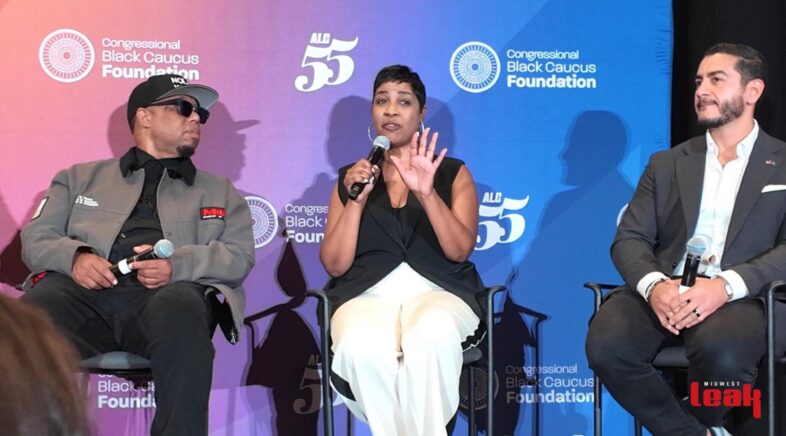
Hip-hop has long played a role in political expression, community organizing, and conversations about social change. At the 2026 Congressional Black Caucus Foundation Annual Legislative Conference in Washington, D.C., Indianapolis Congressman André Carson continued his annual Hip-Hop and Politics discussion, bringing together voices from entertainment, activism, and public service to explore the political power of the hip-hop community.
Carson, who has his own history as a rapper, recalled how political opponents once attempted to use his involvement in hip-hop against him. Having performed alongside artists including Too Short, Da Brat, Do or Die, and Above the Law, Carson embraced his connection to the culture and made it part of his approach to public service.
His annual discussion challenges the hip-hop community to recognize its collective influence and consider how that power can translate into political representation, accountability, and meaningful policy changes.
Turning Cultural Influence Into Political Power
The conversation featured entrepreneur and Roc-A-Fella Records co-founder Dame Dash, Hip Hop Caucus President and CEO Rev. Lennox Yearwood Jr., Michigan U.S. Senate candidate Abdul El-Sayed, Madam Walker Legacy Center leader Kristen Little Strickland, and Indiana hip-hop artist Little Billy.
Carson raised a central question: How can the hip-hop community leverage its influence to hold elected officials accountable after the campaign ends?
He challenged the familiar practice of politicians courting Black voters through celebrity endorsements, popular music, and cultural appearances while failing to consistently represent their interests in office.
His vision also includes developing future political leaders from within hip-hop communities, encouraging artists and cultural influencers to pursue positions on school boards, city councils, and in state and federal government.
Understanding How Policy Shapes Our Communities
Rev. Lennox Yearwood Jr. emphasized the urgency of political engagement.
“We have to shape policy. We must shape policy, ’cause either you shape policy or policy shapes you,” he explained.
Yearwood discussed issues including climate change, housing, education, and environmental justice, drawing from his Louisiana roots and the ongoing impact of industrial pollution in communities along the Mississippi River.
Abdul El-Sayed examined the relationship between language and power, explaining how hip-hop communicates complex experiences in ways that connect with everyday people. He encouraged political leaders to communicate with similar clarity about who holds power and how it should be used.
The conversation also addressed censorship, political accountability, and the importance of representation in decision-making spaces.
Indianapolis Culture Represented on a National Stage
Indianapolis had a strong presence in the discussion, with Carson joined by Kristen Little Strickland, who leads the historic Madam Walker Legacy Center.
Strickland highlighted Madam C.J. Walker’s legacy of entrepreneurship, philanthropy, and community investment while discussing the center’s continued role as a cultural institution in Indianapolis.
“You can’t move anything forward without the community,” she shared.
Indiana artist Little Billy was also among the featured participants, reinforcing Carson’s commitment to bringing Indianapolis voices into national cultural and political conversations.
As the discussion concluded, the message centered on the responsibility that comes with influence. Hip-hop has the ability to inform, mobilize, and connect communities across generations. Carson and his guests encouraged participants to use that influence to shape the decisions affecting their lives.


Leave a comment