Your Calls Count: Mapping The Effects Of The Blackout In Gary, Indiana
By: Le’Deana
In Lake County, the map that went to Washington was built from residents’ phone calls. Or the lack of them.
The state did not come door to door. Officials drove the streets and rated homes from the car, which the state calls a windshield assessment. The Indiana Department of Homeland Security and FEMA finished that survey on Thursday, August 20, the same day Gov. Mike Braun sent his federal disaster request for Indiana to the White House.
From behind the wheel, a house with a good roof looks fine.
You cannot see the water in the basement from the street, the food thrown out on day four, the insulin that went warm in a dark refrigerator, or the oxygen machine that had nothing to run on. You cannot see the grandmother who slept at her daughter’s for nine nights, or the man who ran a generator in his garage because he did not know where else to put it. You cannot see the week of pay a barber lost with no lights in the shop, or the mother who missed three shifts because she didn’t feel safe leaving her children home alone. You cannot see what a family spent on ice, gas, and fast food to get through it.
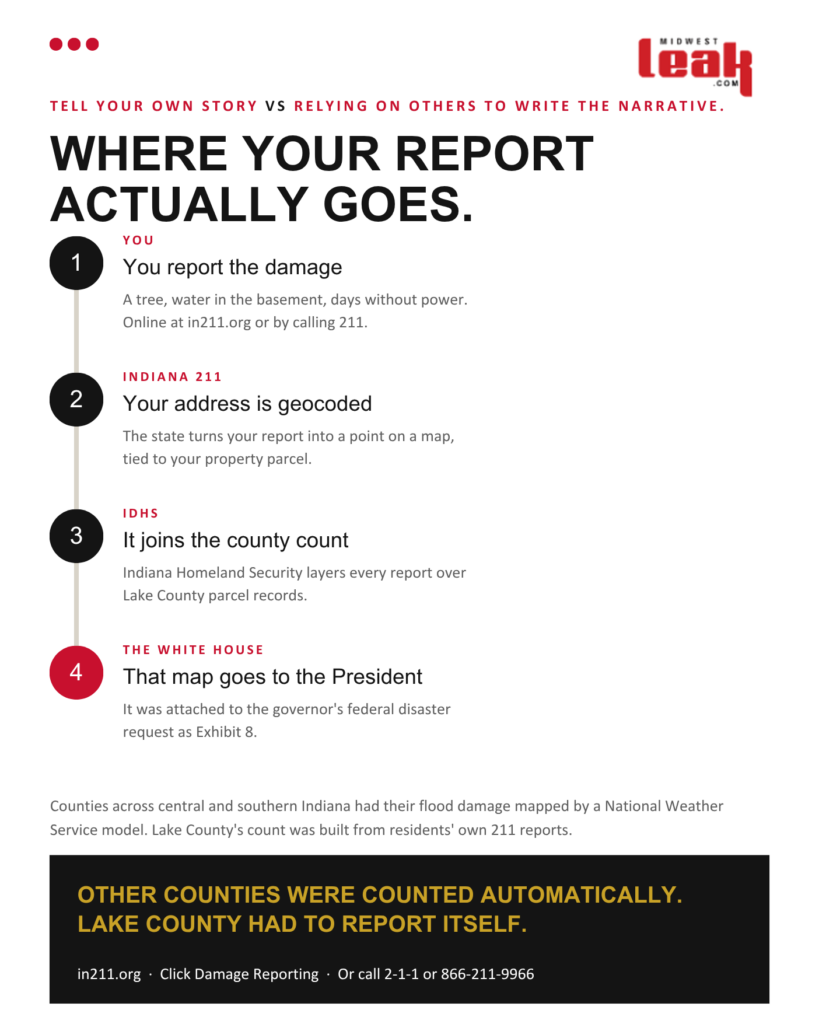
None of that is visible from the road. All of it counts. If it happened inside your house, the only way it enters the record is if you put it there. You do that by calling 211.
How to report your storm damage in Gary and Lake County
Online, any time: go to in211.org and click Damage Reporting. The form is open around the clock, it takes about five minutes, and it works on a phone.
By phone: call 211 or 866-211-9966. Check the hours before you dial, because the damage reporting line has run on a weekday schedule during past storm activations.
Reporting is free. You are not applying for anything. You are being counted.
The Map That Went To Washington
On Thursday evening, August 20, Gov. Mike Braun sent President Donald Trump an expedited request for a major disaster declaration covering individual and public assistance in 54 counties. As of this publication, it has not been approved.
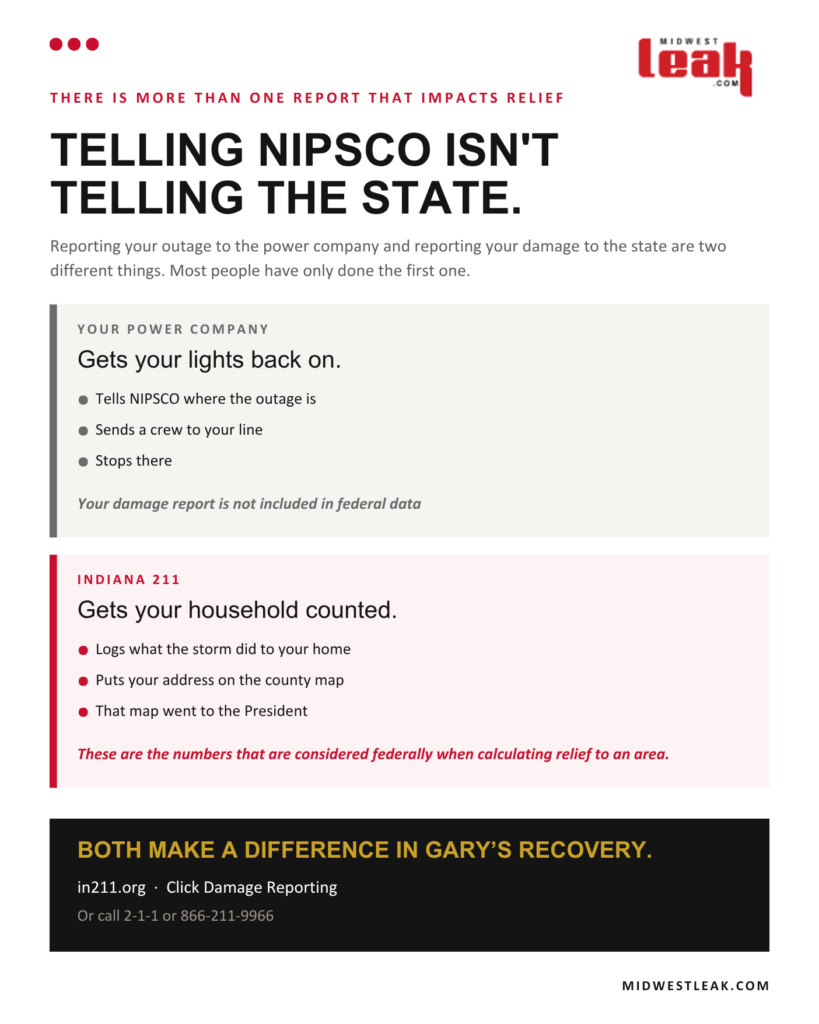
Attached to that request was a map of Lake County. Not a flood model. Not a satellite survey. A map titled “Indiana 211 Self-reported Damage and Residential Parcels,” built from the damage calls residents made, current as of August 19.
That map counted 5,611 Lake County homes.
Lake County has 202,344 homes.
Every one of those 5,611 is a household that picked up a phone during a blackout and told the state what happened to them. That is the evidence Lake County sent to Washington.
More details on the letter and the mapping process here.
What to report, even if you think you were fine
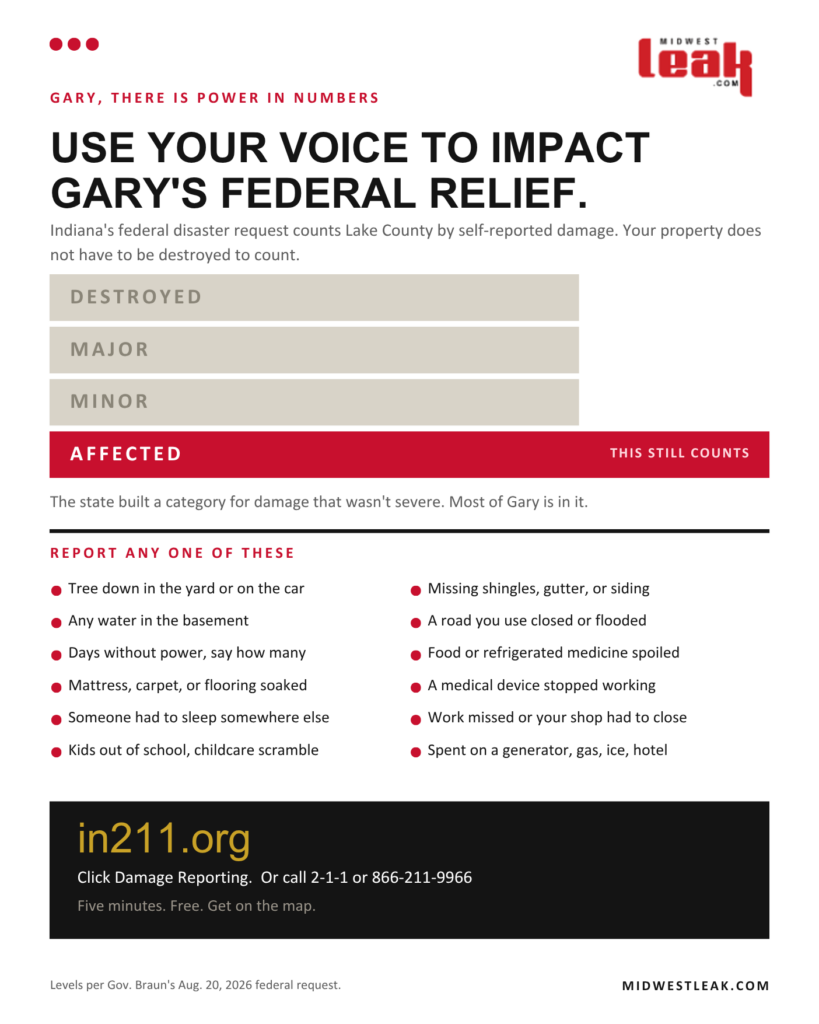
The state counts four levels of damage: destroyed, major, minor, and affected. The last category exists specifically for damage that was not severe so know that you do not have to be destroyed to count.
Call 211 or 866-211-9966, or use the Indiana 211 damage reporting tool online. Report and take photos of any of the following:
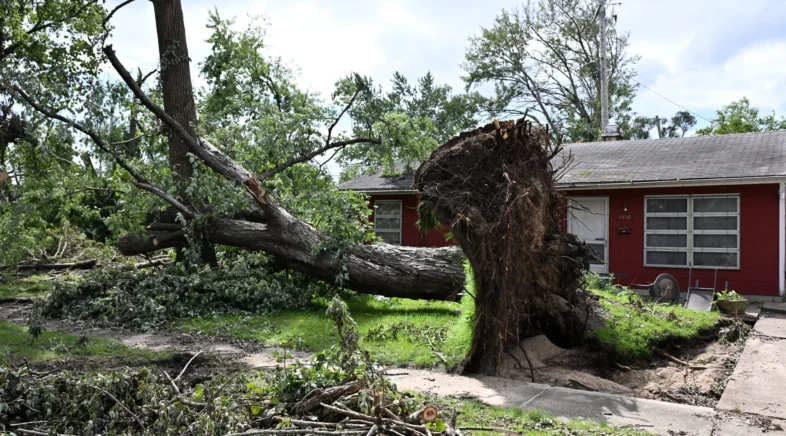
- A tree down in your yard, on your garage, fence, or car
- Missing shingles, a gutter, siding, or a window
- Any water in your basement, however little
- A road you use that was closed, flooded, or blocked
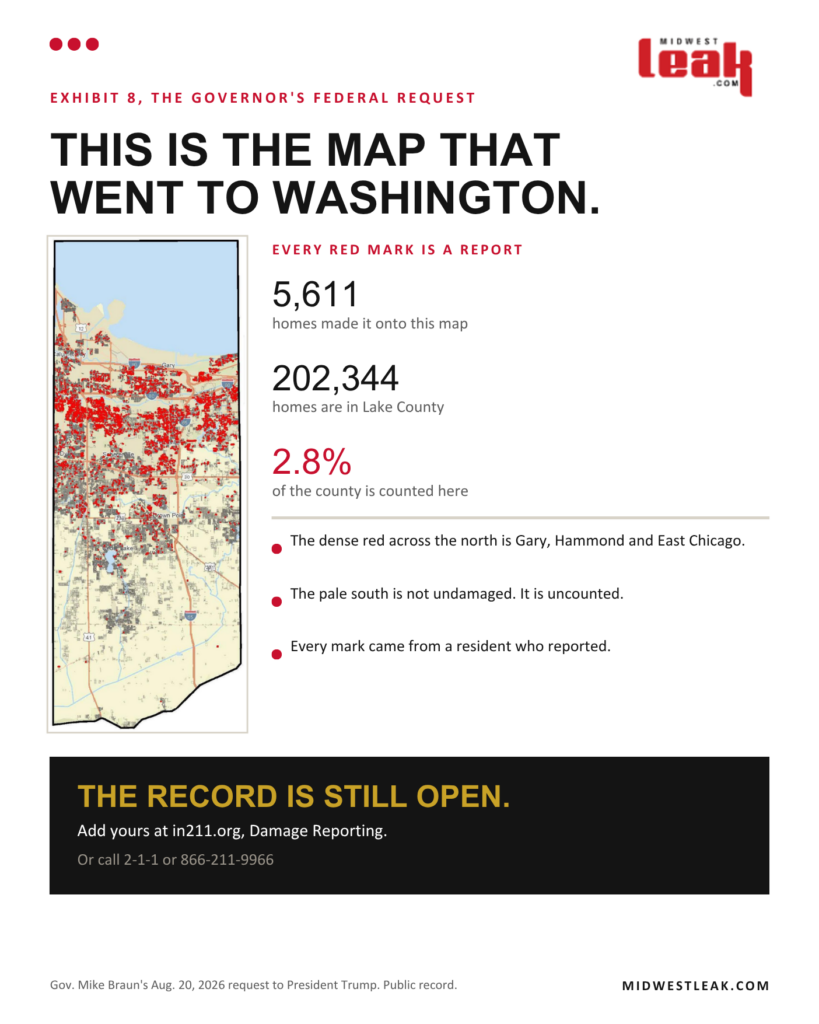
- Days without power, and how many
- Food that spoiled, or refrigerated medication like insulin that was ruined
- A mattress, carpet, or flooring that got soaked
- A medical device that stopped working, or oxygen that could not be recharged
- Anyone in the house who had to sleep somewhere else
- Work missed, or a shop or business that had to close
- Kids out of school and childcare you had to scramble to cover
- Money spent on a generator, gas, ice, a hotel, or eating out
This is not the time for modesty. The most common thing we have heard this week is some version of “I’m okay. Save the help for somebody who needs it worse.”
There is no line. Nobody loses assistance because you were counted. The count is how the overall need is measured and how the relief gets to the people.
What the Money Looks Like
The state fund is open now. Households whose primary residence was damaged may qualify for up to $5,000 through the Indiana State Disaster Relief Fund. That figure is confirmed in Braun’s own federal filing, which states that state disaster relief grants of up to $5,000 per household were made available. Per household, not per person.
It covers uninsured damage only, and only certain items: home repairs, essential furnishings, essential appliances, essential tools, debris removal, medical devices, and essential transportation. It does not cover insurance deductibles, prescriptions, mold and mildew removal, or spoiled food.
Apply at on.in.gov/August2026Disaster.
If the federal request is approved, the scale changes. The FEMA cap this fiscal year is $44,800 for housing and a separate $44,800 for other needs, as grants rather than loans. Almost no household receives the maximum. The point is that the state cannot pay more than $5,000 no matter how bad it was, and the federal government can.
The governor also requested Disaster Unemployment Assistance, which covers lost income for people who do not qualify for regular unemployment, including the self-employed. Barbers, stylists, contractors, drivers, vendors, anyone whose business went dark. He requested Crisis Counseling and Disaster Legal Services as well. Legal services can be an invaluable resource for renters dealing with landlords over uninhabitable units.
Federal applications are not open yet, so anyone offering to file a FEMA claim for you right now is not legitimate
If you lost food and you receive SNAP
Replacement benefits are a separate program with a separate deadline with requests being required to be submitted within 10 days of the loss. If you are past that window or unsure, call your local Division of Family Resources office and ask rather than assuming you missed it.
To Those Supporting Gary This Weekend
To every organizer running a food distribution, a water drop, or a shower station in Gary this weekend: you have the most concentrated group of storm-affected residents anywhere in the city, standing still and you’re able to connect with them while they wait.
Put a sign out and a volunteer with a charged phone at the line and let people call 211 or Go to in211.org and click “Damage Reporting” on the spot or click here.
Report it. Five minutes. It costs nothing. And it is the only place your version of what happened gets written down.